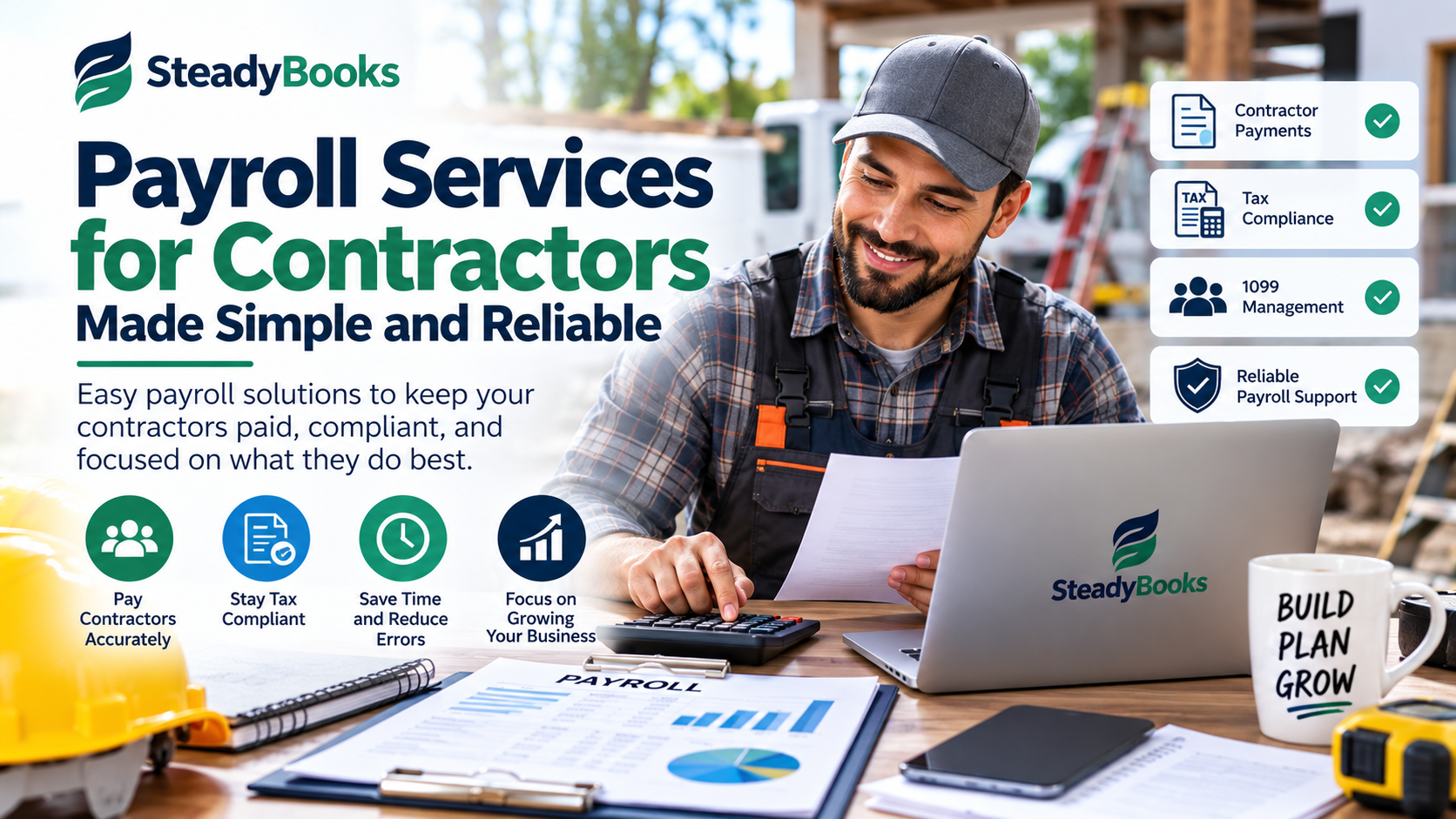
Nearly 40% of construction firms cite administrative errors as a primary cause of project budget overruns. Payroll services for contractors involve more than cutting checks on a Friday. They also require tracking shifting job sites, worker classifications, and strict union regulations.
When you handle these tasks manually, compliance risks grow with every new hire. Reliable systems do more than automate math; they give owners the clear visibility needed to protect profit margins. Using the best payroll software for construction company needs can transform how your business tracks labor expenses.
This article explains how modern tools and outsourced support help you maintain accuracy across every project. We compare various approaches to help you choose a process that fits your operational scale.
Key Takeaways
- Effective management of labor costs prevents common budget overruns on job sites.
- Compliance with union rules and prevailing wage laws is essential for avoiding legal penalties.
- Modern digital solutions offer better accuracy than manual tracking methods.
- Choosing the right platform provides owners with real-time control over project expenses.
- No single solution fits every business, so evaluating your specific needs is vital.
Why Contractor Payroll Requires More Than Cutting Checks
Managing contractor payments is more complex than issuing a standard paycheck. Employees often receive fixed salaries, but contractors work under terms that can change weekly. Professional oversight ensures each payment matches project milestones and agreed rates.
How contractor pay differs from standard employee payroll
Standard employee payroll is usually predictable, with set hours and steady tax withholdings. Contractors, however, may perform different tasks at varying rates during one pay period. A specialized approach to construction payroll services helps businesses manage these changes without administrative bottlenecks.
Contractors may work across multiple sites, so pay must connect to project codes. This links labor costs to the correct budget. Without this detail, tracking a project’s true profit becomes nearly impossible.
Why accurate records matter across multiple projects
Keeping precise payroll records is central to healthy business operations. When a contractor works on several jobs, linking hours to tasks helps prevent billing errors and client disputes. Clear documentation protects both the payer and the worker.
Detailed records also make year-end tax work easier. By recording expenses, hourly rates, and project assignments in real time, companies avoid searching for data during filing season. Reliable data entry helps maintain compliance and financial transparency.
The risks of handling payroll informally
Informal methods, such as spreadsheets or undocumented cash payments, create major liability. These methods can cause missed deadlines, wrong tax filings, and legal disputes over back pay. Construction payroll services give businesses structure to reduce these risks.
Without a formal system, missing payroll records can cause audit failures. Consistency is key to protecting your business from unnecessary financial exposure. The following table shows the main differences between managing these labor types.
| Feature | Standard Employee | Independent Contractor |
|---|---|---|
| Payment Basis | Fixed Salary/Hourly | Project/Milestone/Rate |
| Tax Handling | Employer Withholds | Self-Employed Responsibility |
| Documentation | W-2 Forms | Form 1099-NEC |
| Work Flexibility | Defined Schedule | Variable/Task-Based |
Payroll services for contractors: What They Usually Include
Effective contractor payroll processing involves more than issuing payments on time. Professional payroll services for contractors, also called contractor payroll services, create a clear system for accurate pay and labor law compliance.
Pay calculation and scheduled disbursements
Reliable systems calculate wages from submitted hours, project milestones, or fixed fee agreements. With automated workflows, businesses can send payments by direct deposit or check, regardless of worker classification.
Payroll tax withholding, deposits, and filings
These services manage payroll tax withholding for employees. Providers calculate federal, state, and local taxes and send deposits to the proper agencies on time. This helps businesses avoid penalties.
Year-end forms and contractor payment records
Accurate payroll reporting creates a clear audit trail throughout the fiscal year. These services combine payment data and simplify tax documents for internal records and government submission.
W-2 forms for employees
For employees, the service prepares and distributes W-2 forms. It reports taxable income and withholdings correctly to the Social Security Administration and the IRS.
Form 1099-NEC reporting for eligible independent contractors
For 1099 contractor payroll, the focus shifts to non-employee compensation. The service tracks payments to eligible independent contractors and prepares Form 1099-NEC for annual reporting requirements.
| Feature | W-2 Employee | 1099 Contractor |
|---|---|---|
| Tax Withholding | Mandatory | Not Applicable |
| Year-End Form | W-2 | 1099-NEC |
| Payment Basis | Hourly/Salary | Project/Fixed Fee |
| Compliance Focus | Labor Standards | Tax Reporting |
Getting Worker Classification Right Before the First Payment
Getting worker classification right is the most critical step before your first payment. Mislabeling a worker can cause major tax penalties and legal problems for your business. Learning the rules early protects your company and supports a smooth 1099 contractor payroll process.
How the IRS distinguishes employees from independent contractors
The IRS does not use one factor to define a worker. Instead, it reviews the entire relationship between the business and the individual. It generally focuses on three categories: behavioral control, financial control, and the type of relationship.
Behavioral control asks whether the business directs how, when, and where work happens. Financial control examines whether the worker invests in equipment or can earn a profit or face a loss. Finally, the relationship category considers benefits and whether the work is central to the business.
Why a contract alone does not determine worker status
Many business owners believe a signed agreement alone makes someone an independent contractor. However, the IRS prioritizes the actual working relationship over any written label. If you treat a worker like an employee, a contract cannot change that reality.
Courts and tax authorities look beyond paperwork at daily work. If the facts show significant control, authorities may classify the worker as an employee. Make sure your daily operations match the legal status you assigned.
Warning signs of misclassification on construction and project teams
In construction, certain practices often trigger audits. Be cautious if you control a worker’s daily methods or require exclusive work for your firm. Providing essential tools or treating a contractor as a permanent crew member also raises red flags.
When you manage a project team, watch for these signs of possible misclassification:
- Setting specific work hours rather than project milestones.
- Providing training on how to perform specific tasks.
- Requiring the worker to use your company’s proprietary software or tools.
- Paying the worker on a recurring salary basis instead of per project.
What to document when classification is unclear
When the line between an employee vs independent contractor feels unclear, documentation offers your best defense. Keep a clear paper trail that supports your classification decision. This keeps you audit-ready and provides peace of mind.
Keep the following records on file for every worker:
- A signed contract detailing the scope of work.
- Invoices that reflect specific project milestones.
- A written review explaining why you classified the worker as a contractor.
- Onboarding documents and proof of the worker’s own business registration.
| Factor | Independent Contractor | Employee |
|---|---|---|
| Control | Controls own methods | Business controls methods |
| Tools | Provides own equipment | Business provides tools |
| Payment | Paid per project/milestone | Paid hourly or salary |
| Benefits | No benefits provided | Eligible for company benefits |
Building a Reliable Contractor Payroll Process
A clear payroll process turns office chaos into a steady business routine. Standard steps lower errors and keep your team focused on projects, not payment disputes.
Collecting tax forms and payment details during onboarding
Every payment system starts with careful onboarding. Before work begins, collect key tax forms, such as Form W-9, and verified banking information. Securing these details early prevents delays when the first payment cycle begins.
Setting pay rates, billing terms, and approval rules
Clear pay terms help maintain professional relationships. Use your contractor payroll software to set pay rates, billing cycles, and approval workflows. These rules show both parties when and how payments will be processed.
Tracking hours, milestones, expenses, and project codes
Modern projects need detailed records to stay profitable. Use mobile time capture and digital expense reports to support job costing payroll. This approach connects each dollar to the correct project code and gives you a clearer view of your bottom line.
Creating a payroll calendar that prevents missed deadlines
A consistent payroll calendar helps control your business. Map submission cutoffs, review dates, and disbursement schedules to prevent late payments. This plan helps manage cash flow while keeping contractors satisfied and productive.
| Process Component | Manual Tracking | Automated System |
|---|---|---|
| Data Entry | High Error Risk | High Accuracy |
| Approval Speed | Slow/Bottlenecked | Instant Notifications |
| Reporting | Fragmented | Real-time Analytics |
| Compliance | Manual Oversight | Automated Updates |
Adding contractor payroll software to daily operations simplifies job costing payroll. A reliable payroll calendar protects your business from disorganized financial management. Consistency is the key to building lasting trust with your project teams.
Managing Taxes, Withholding, and Compliance Obligations
Knowing the difference between employee and contractor tax duties protects your company from avoidable risk. Maintaining payroll compliance requires active attention to tax laws. Errors can cause major penalties and legal challenges, while professional construction payroll services simplify complex daily rules.
Payroll taxes for employees versus self-employment taxes for contractors
Employers must withhold income tax, Social Security, and Medicare from employee paychecks. They submit these funds with the employer’s share of payroll taxes to the government.
Independent contractors handle their own self-employment taxes. You do not perform payroll tax withholding for contractors, but report their earnings to the IRS using Form 1099-NEC.
Federal, state, and local filing responsibilities
Beyond basic withholding, businesses must handle many filing requirements. These include unemployment insurance contributions and local income tax deposits.
- Federal: Timely deposits of withheld taxes and quarterly filings.
- State: Adherence to specific state income tax and unemployment insurance rules.
- Local: Compliance with city or county-level payroll taxes where the work occurs.
State registration and rules for contractors working across borders
Operating across jurisdictions creates the challenge of managing multi-state payroll. Each state has unique registration rules for businesses hiring workers within its borders.
Your payroll system must account for reciprocity agreements between states. Incorrect registration in a new state can trigger audits and disrupt project timelines.
How payroll providers help maintain an audit-ready paper trail
For federally funded projects exceeding $2,000, the government requires strict certified payroll reporting. This process requires Form WH-347 and a signed Statement of Compliance. These documents verify that workers receive the correct pay.
Maintaining prevailing wage compliance helps avoid costly disputes. A reliable payroll provider documents every calculation and creates an audit-ready record that tracks:
- Approved hours and project-specific pay rates.
- Verification of union agreement adherence.
- Detailed logs of all tax filings and deposits.
Paying Contractors Accurately When Projects Change
Construction projects rarely follow a straight path, so flexible payment systems matter. When scopes change, your contractor payment processing must stay flexible to prevent delays and disputes. A clear framework helps pay every worker fairly as the project evolves.
Handling variable hours, retainers, milestones, and progress payments
Project phases often need different payment methods. Some contractors work hourly, while others use retainers or milestone contracts.
- Hourly Labor: Best for tasks with unpredictable durations.
- Retainers: Ideal for securing availability on long-term projects.
- Milestones: Useful for incentivizing completion of specific project phases.
Consistency is key when managing these arrangements. Your system should handle each variation without manual workarounds that can cause human error.
Approving timesheets and correcting payroll errors
Even strong systems can have problems. A clear approval workflow catches errors before payment goes out. If a timesheet is rejected, staff should communicate and fix it quickly.
“Accuracy in payroll is not just about the numbers; it is about building trust with your team through reliable and transparent payment practices.”
When errors happen, such as duplicate payments or wrong rates, use a formal correction process. This keeps small mistakes from becoming larger compliance issues.
Managing reimbursements, advances, deductions, and bonuses
Contractors often need expense payments or performance bonuses beyond base pay. Track these items separately to keep financial records clear.
| Item Type | Impact on Budget | Documentation Needed |
|---|---|---|
| Reimbursements | Direct Project Cost | Receipts/Invoices |
| Advances | Cash Flow Adjustment | Signed Agreement |
| Bonuses | Overhead/Profit | Performance Review |
These additions require careful oversight. Clearly explain deductions to prevent confusion during the payment cycle.
Keeping payroll aligned with client invoices and project budgets
Effective job costing payroll helps project managers track a job’s financial health in real time. Linking payroll data to client invoices reveals margin pressure before the project ends.
This link gives managers the insight needed for smart staffing decisions. When payment data matches the budget, you can grow operations while controlling your bottom line.
Choosing Between In-House Payroll, Software, and a Provider
Choosing among manual work, software, and professional services can shape your business’s future. Business owners must weigh hands-on control against automated efficiency. The right balance keeps workers paid on time and lowers compliance risks.
When an internal payroll process may be practical
An internal process often suits small, stable teams with simple pay structures. If your business operates in a single state with consistent contractors, manual tracking might work. This method gives you total control over each payment detail.
However, this model takes time and requires strong knowledge of tax regulations. Without dedicated staff, manual calculations can quickly cause errors. You must keep internal records ready for audits at all times.
What payroll software can automate
For many growing companies, payroll software for small business offers a useful middle ground. These platforms handle tasks like tax withholding, direct deposits, and year-end forms. Using contractor payroll software lowers errors and improves project cost visibility.
Modern tools also connect smoothly with accounting and time-tracking software. These connections keep financial data synchronized across platforms. Automation lets you focus on growth instead of administrative paperwork.
When outsourced payroll support offers better value
As your business grows, payroll needs can become too complex for standard tools. Outsourced payroll services offer expert help with multi-state operations and union rules. These providers help you follow changing labor laws.
“The true value of professional payroll support lies not just in the calculation of wages, but in the peace of mind that comes from knowing your compliance obligations are fully managed by experts.”
Comparing costs, control, expertise, and scalability
Your business needs should guide your choice. While outsourced payroll services cost more, they can prevent expensive penalties. In contrast, contractor payroll software helps you stay independent while growing.
| Feature | In-House | Software | Outsourced |
|---|---|---|---|
| Cost | Low (Time-intensive) | Moderate (Subscription) | High (Service fees) |
| Control | Maximum | High | Limited |
| Expertise | Internal Staff | Built-in Logic | Professional Advisors |
| Scalability | Difficult | Moderate | Excellent |
Ultimately, the best payroll software for small business grows with your company. Review your administrative workload and decide whether project management or payroll deserves your time. The right choice today can protect your business from future risks.
What to Look for in a Contractor Payroll Service
Choosing the right payroll partner matters when your business manages a diverse workforce. Before choosing a provider, ensure its platform handles the demands of your specific industry and project structure.
“Efficiency in payroll is not just about speed; it is about the absolute accuracy of every dollar paid and every tax form filed.”
Support for employees, independent contractors, and mixed teams
Modern businesses often use full-time employees and freelancers. You need contractor payroll services that manage each group correctly under one roof. A strong system should automate the difference between W-2 withholdings and 1099 disbursements to prevent administrative errors.
Tax compliance expertise for the states where you operate
Managing multi-state payroll requirements challenges growing companies. Your provider must know local tax codes so you stay compliant wherever workers are located. This matters most for firms handling government contracts, which require strict prevailing wage compliance and certified payroll reporting.
Secure data handling, access controls, and payment protection
Protecting sensitive financial data is essential. Look for providers offering multi-factor authentication, granular access controls, and encrypted payment workflows. Also, verify their procedures for updating banking details to prevent unauthorized changes.
| Feature | Why It Matters | Security Level |
|---|---|---|
| Audit Logs | Tracks every system change | High |
| Role-Based Access | Limits data exposure | High |
| Encrypted Portals | Protects personal info | High |
Integration with accounting, time tracking, and project management tools
A smooth workflow depends on how well payroll connects with your other software. Review an overview of independent contractor payroll to learn how these operational models fit your tech stack. Test these integrations with real-world scenarios instead of relying on a polished sales demo.
Responsive support when a payment or classification issue arises
Even the best systems face occasional problems. When a classification dispute or payment error occurs, you need immediate access to experts who understand your business. Choose a partner with dedicated support channels, not generic ticketing systems, so operations continue without interruption.
Common Payroll Mistakes That Create Unnecessary Risk
Many business owners create risk by treating contractor payments like a casual handshake. Fast projects need speed, but memory and disconnected spreadsheets create serious weaknesses. Small administrative shortcuts today can cause costly legal and financial problems tomorrow.
Paying workers without collecting complete tax documentation
One common error is paying a contractor before collecting a valid Form W-9. Without it, you may lack information needed to report payments to the IRS correctly. Collecting tax forms during the onboarding phase helps prevent identity problems and reporting delays later in the year.
Using the same process for employees and independent contractors
Treating every worker alike can lead to worker classification disputes. Employees need tax withholding and benefits, while independent contractors manage their own tax duties. Mixing these processes can cause audits and penalties because each group follows different legal requirements.
Missing filing deadlines or relying on inaccurate records
Accurate payroll records support internal planning and outside reporting. Informal notes and late entries can cause businesses to miss key filing deadlines. These failures can bring fines and weaken professional trust with your team.
Failing to reconcile payroll with bank accounts and job costs
Compare payroll results with bank statements and project budgets regularly. If the numbers differ, you may overpay for labor or misassign project funds. Consistent reconciliation helps catch errors that might otherwise remain hidden for months.
Ignoring changes in state and federal compliance requirements
Labor and tax laws change often, making payroll compliance a moving target. If you ignore new state or federal rules, your business may face unexpected liabilities. Staying informed keeps payment practices secure and legally sound.
| Common Mistake | Primary Risk | Recommended Action |
|---|---|---|
| Missing W-9 Forms | Reporting penalties | Collect before first payment |
| Classification Errors | Legal/Tax audits | Verify status annually |
| Poor Record Keeping | Data loss/Fines | Use digital tracking tools |
| Ignoring Law Changes | Compliance failure | Review updates quarterly |
Measuring the Value of Professional Contractor Payroll Support
To measure payroll’s true value, look beyond the monthly subscription fee. The cost of outsourced payroll services appears on a balance sheet, but hidden time and risk savings matter too. Business owners should judge their systems by efficiency, accuracy, and data quality.
Calculating time saved by owners and project managers
Manual payroll tasks can take hours from core business activities. Automating data collection and payment scheduling restores that lost time. Efficiency gains let project managers oversee sites instead of chasing timesheets or checking payment details.
Estimating the cost of payroll errors and late filings
Payment errors can cause costly penalties and harm workforce relationships. Strong payroll compliance helps prevent costs from IRS audits and state-level tax discrepancies. Investing in professional support works like insurance against these costly mistakes.
Evaluating cash flow visibility and project profitability
Effective systems offer a clear view of your financial health. Tracking labor costs by project code helps you understand actual profit margins. This level of payroll reporting keeps cash flow timing visible.
Using payroll reporting to make better staffing decisions
Data-driven insights show which projects need the most labor. Reviewing historical trends helps you choose between full-time staff and independent contractors. Strategic staffing becomes easier with accurate, real-time labor data.
Signs that your current payroll process needs to change
Recognizing when your internal process reaches its limit is vital for sustained growth. These issues may signal a need for external help:
- Recurring late filings or missed tax deadlines.
- Unexplained labor variances that impact project budgets.
- Frequent disputes with workers regarding payment accuracy.
- Project managers who lack confidence in the provided payroll data.
A stronger system keeps your business agile and protected. Prioritizing payroll compliance today prevents major operational problems later.
Conclusion
Managing your workforce takes more than issuing payments on time. Reliable payroll services for contractors combine accurate wage calculations, correct worker classification, and strict tax compliance. These steps protect your company from legal risks and keep your team focused on project success.
The best solution depends on your team structure, state coverage, and union requirements. Review your documents, approval workflows, and data security measures before choosing a system. Using construction accounting software like JOBPOWER helps streamline these tasks by integrating job costing and mobile tools into your workflow.
Strong contractor payroll services turn administrative work into a business advantage. Consistent payroll compliance helps you expand across state lines with confidence. Tools that support prevailing wage reporting and multi-union needs create a foundation for long-term growth and stability.
Treat payroll as a vital risk-control tool, not a simple chore. Investing in the right systems prevents costly errors and keeps project records ready for audits. Professional management practices help your business stay resilient in a competitive construction market.