

Current Ratio: How to Calculate and Read It for Your Business
Your bank balance looks healthy, but the bills due next month could still outpace what you can pay. The current ratio shows you that gap before it becomes a problem. It compares what you own that will turn into cash soon with what you owe soon.
This guide explains the current ratio formula and where to find each number on your balance sheet. It also walks through a full worked example and shows how to read the result without being misled.
You don’t need an accounting degree to use it. If you can pull a balance sheet and do one division, you can calculate your current ratio in a few minutes.
What the Current Ratio Tells You About Short-Term Cash Needs
In plain English, the current ratio is a snapshot. It answers one question: do your short-term resources cover your short-term obligations? A ratio of 1.0 means they match exactly on paper.
Why short-term bills matter more than total debt
The current ratio is a liquidity ratio. Some people also call it the working capital ratio because it uses the same two inputs as working capital. It focuses on the next twelve months, not your total debt load.
That focus is deliberate. A five-year equipment loan won’t sink you this quarter. Payroll, supplier invoices and sales tax due in the next few weeks can.
Who uses this ratio
Several groups watch this number:
- Owners use it to spot cash strain early.
- Lenders review it before approving or renewing credit.
- Suppliers may check it when setting credit terms.
- Bookkeepers often include it in monthly reports.
The SBA’s Manage Your Finances guidance encourages owners to keep a regular eye on their cash position and upcoming obligations. The current ratio is one simple way to do that.
The Current Ratio Formula Explained
Fortunately, the current ratio formula is short:
Current Ratio = Current Assets ÷ Current Liabilities
The result is usually shown as a number, such as 1.5. Some people write it as 1.5:1. Either way, it tells you how many dollars of current assets you have for every dollar of current liabilities.
Current assets and current liabilities defined
Current assets are cash plus other assets you expect to convert to cash or use up within one year or one operating cycle, whichever is longer. Your operating cycle is the time it takes to buy inventory, sell it and collect payment.
Current liabilities are obligations due within one year or one operating cycle.
Under U.S. generally accepted accounting principles (GAAP), balance sheet items are classified as current or noncurrent. The Financial Accounting Standards Board (FASB) sets those standards. Some items aren’t clear-cut, such as a loan with unusual repayment terms. If you aren’t sure how to classify one, ask your accountant before you calculate.
How to Find Current Assets and Current Liabilities on Your Balance Sheet
Most balance sheets list current items first. You’ll typically see headings such as “Current Assets” and “Current Liabilities,” each with a subtotal. If your report shows those subtotals, you already have both numbers you need.
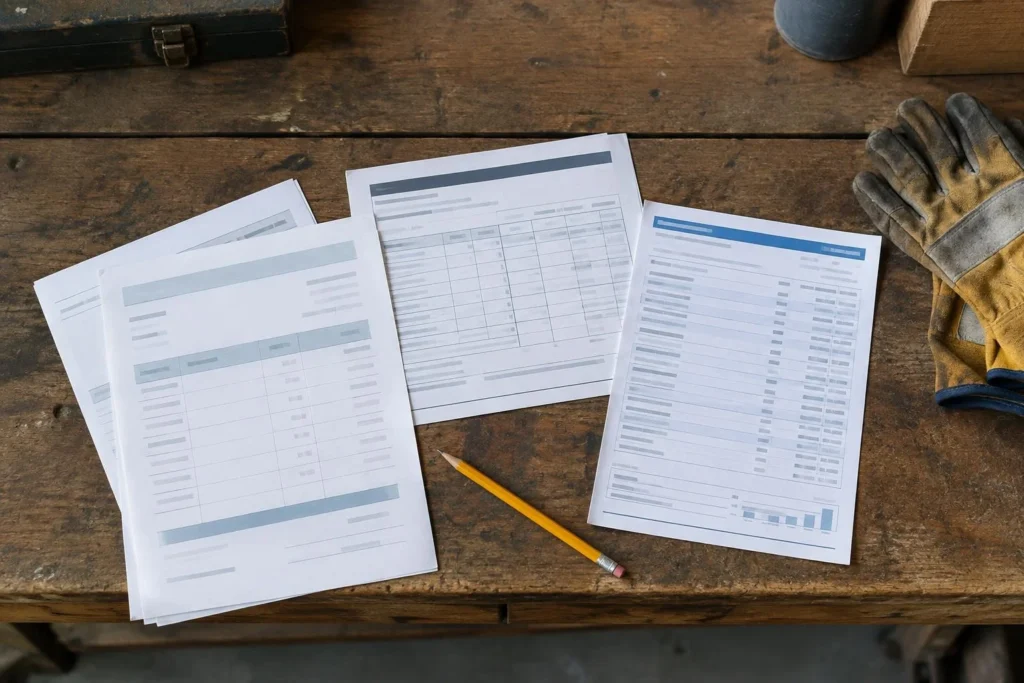
If it doesn’t, use the checklists below to sort each account.
Current assets checklist
- Cash on hand: petty cash and undeposited funds.
- Bank accounts: checking and savings balances.
- Accounts receivable: invoices customers owe you.
- Inventory: goods held for sale, plus raw materials.
- Prepaid expenses: insurance, rent or subscriptions paid in advance.
- Short-term investments: holdings you expect to convert to cash within the year.
Current liabilities checklist
- Accounts payable: unpaid supplier and vendor bills.
- Credit card balances: business card amounts owed.
- Current portion of long-term loans: principal due in the next twelve months.
- Accrued payroll and payroll taxes: wages earned but not yet paid, plus employer taxes such as FICA.
- Sales tax payable: tax collected from customers but not yet remitted.
- Customer deposits or unearned revenue: payments received for work you haven’t delivered yet.
Watch for this common miss: the current portion of a long-term loan. Many small business balance sheets show the full loan as long-term. As a result, the payments due this year never appear in current liabilities, which makes the ratio look better than it is. Your lender’s amortization schedule shows the split, and your accountant can confirm the right figure.
Worked Example: Calculating a Current Ratio from a Sample Balance Sheet
Let’s walk through a fictional business, Oak Street Bakehouse. The numbers below are illustrative only. They aren’t real client data.
Sample figures
| Current Assets | Amount |
|---|---|
| Cash (bank accounts) | $18,500 |
| Accounts receivable | $6,200 |
| Inventory | $9,800 |
| Prepaid insurance | $1,500 |
| Total current assets | $36,000 |
| Current Liabilities | Amount |
|---|---|
| Accounts payable | $8,400 |
| Credit card balance | $3,100 |
| Current portion of loan | $6,000 |
| Sales tax payable | $1,700 |
| Accrued wages | $2,800 |
| Total current liabilities | $22,000 |
Step-by-step calculation
- Add the current assets: $18,500 + $6,200 + $9,800 + $1,500 = $36,000.
- Add the current liabilities: $8,400 + $3,100 + $6,000 + $1,700 + $2,800 = $22,000.
- Divide: $36,000 ÷ $22,000 = 1.636…
- Round to two decimals: 1.64.
Reading the result
A ratio of 1.64 means the bakery has about $1.64 in current assets for every $1.00 it owes in the next year. Because the ratio is above 1, current assets exceed current liabilities on paper. A ratio below 1 would mean the reverse. In that case, the business would owe more in the short term than it has in short-term resources.
“On paper” matters, though. Inventory has to be sold, and receivables have to be collected, before either one pays a bill.
So take one more step and check cash alone. Suppose the owner expects accounts payable, the credit card, sales tax and accrued wages to come due within the next month. Those total $16,000. Cash of $18,500 covers that amount, with $2,500 to spare. The bakery’s position looks reasonable, but the cushion is thinner than 1.64 suggests.
Finding Your Numbers in Accounting Software
You don’t have to add accounts by hand. Your accounting software already builds the balance sheet for you.
Pulling the balance sheet in QuickBooks
In QuickBooks Online, the general steps are:
- Open Reports from the left-hand menu.
- Search for Balance Sheet and open it.
- Set the report date, usually the last day of the month you’re reviewing.
- Choose a summary view, such as showing a single total column, so the report stays easy to read.
- Run the report.
- Expand the Current Assets and Current Liabilities sections to see each individual account.
- Export the report to Excel, or open the export in Google Sheets.
- In a blank cell, divide the total current assets cell by the total current liabilities cell. For example, if those totals sit in B12 and B30, enter =B12/B30.
Intuit updates its menus from time to time, so labels may differ slightly. Xero, FreshBooks, Wave and other platforms offer similar balance sheet reports. Check your vendor’s help documentation for the exact menu names.
Reviewing the figures before you calculate
A ratio is only as good as the numbers behind it. Before you trust the result, confirm that every bank and credit card account is reconciled through your report date.
Unreconciled accounts can hide missing transactions, duplicates or uncleared payments. Any of these can distort your cash balance and throw off the ratio. Also scan for odd items, such as a negative inventory balance or an old payable you know you’ve already paid.
What Counts as a Good Current Ratio for a Small Business
There’s no single “good” number that fits every business. A good current ratio for a small business depends on your industry, your business model and how quickly money moves in and out.

Why industry matters
Consider two contrasting businesses. A coffee shop sells inventory within days and is paid at the register. Cash arrives almost as fast as bills do, so it can often run a lower ratio comfortably.
Now picture a furniture maker. It holds slow-moving stock and gives commercial customers long payment terms. That business usually needs a larger cushion of current assets, because its cash arrives weeks or months after costs are paid.
The same ratio could signal health for one business and strain for the other. Compare yourself to businesses that operate the way you do.
Benchmarks to compare against
Useful places to find comparison data include:
- Trade associations, which sometimes publish member financial surveys.
- SCORE mentors, who are volunteer business advisors with industry experience.
- Industry financial data services, which are often available through public or university libraries.
- Your banker or accountant, who may see many businesses like yours.
Your own history is the most useful benchmark of all. Calculate the ratio at each month-end and record it in a simple spreadsheet.
Over time, the trend tells you more than any single snapshot. Suppose your ratio has slipped from 1.8 to 1.5 to 1.2 over three months. That deserves attention, even though 1.2 is still above 1. By contrast, a steady ratio that dips briefly in a known slow season is usually less concerning.
When a High or Low Current Ratio Can Mislead You
The current ratio treats every dollar of current assets as equal. In reality, some dollars are much easier to collect than others. That’s why the number needs context before you act on it.
Signs a high ratio hides a problem
- Slow-moving or obsolete inventory. Stock that hasn’t sold in months still counts as a current asset. If it’s outdated, damaged or out of season, you may never sell it at full value. Your ratio rises, yet your ability to pay bills doesn’t.
- Uncollectible receivables. Old invoices from customers who have stopped responding inflate current assets. Until you write them off or set up an allowance, they make the ratio look stronger than your real cash position.
- Idle cash with no plan. A very high ratio can also mean cash is sitting unused when it could fund growth or pay down costly debt. That’s not a crisis, but it’s worth a conversation with your advisor.
Signs a low ratio is less worrying than it looks
- Planned loan payments. A loan nearing its final year moves into current liabilities, which pushes the ratio down. If you’ve budgeted for those payments, the dip is expected.
- Seasonal timing. A retailer stocking up before the holidays may carry heavy payables for a few weeks. The ratio recovers as sales come in.
- Customer deposits. Upfront deposits count as liabilities until you deliver the work. However, they often come with the cash already in your bank account.
Before you act on the number, work through these questions:
- How old is the inventory, and how much of it has sold in the last 90 days?
- How old are the receivables, and are any customers unlikely to pay?
- Which liabilities are due in the next 30 days, and which can wait?
- Is the cash balance current, with every bank account reconciled?
- Is this month’s change part of a known seasonal pattern?
- Has a loan recently shifted from long-term to current?
If the answers raise concerns, review the figures with your bookkeeper or accountant before you make borrowing or spending decisions.
Put Your Current Ratio to Work This Month
The current ratio is most useful when you track it over time. Here is a simple routine to start this month.
- Pull your latest balance sheet. Run it as of your most recent month-end. Then divide total current assets by total current liabilities.
- Start a simple tracking sheet. Record this month’s ratio alongside the prior two or three months. A trend tells you far more than a single number.
- Review it with a professional. Go over the results with your bookkeeper or accountant. Ask a qualified professional to confirm that accounts are classified correctly, especially sales tax, payroll tax and income tax liabilities.
- Recheck after big changes. Recalculate whenever you take on a new loan, add inventory, or change payment terms with customers or suppliers.
Related reading
- Net Income Explained: Formula, Examples and What It Means
- EBITDA Explained: How Small Businesses Can Calculate It
Frequently Asked Questions
What is a current ratio in simple terms?
The current ratio compares what your business owns that will turn into cash within a year with what it owes within a year. It shows whether you can cover your short-term bills. A ratio above 1 means your current assets are larger than your current liabilities.
How do I calculate the current ratio from my balance sheet?
Find total current assets and total current liabilities on your balance sheet. Then divide the first number by the second. For example, $60,000 in current assets divided by $40,000 in current liabilities gives a current ratio of 1.5.
Is a current ratio of 1 good for a small business?
A ratio of 1 means your current assets exactly match your current liabilities. That leaves no cushion if a customer pays late or an expense comes up unexpectedly. Whether it is acceptable depends on your industry and on how quickly your receivables and inventory turn into cash. Most owners are more comfortable with some margin above 1.
Is the current ratio the same as the working capital ratio?
Yes. “Working capital ratio” is another common name for the current ratio, and both use the same formula. Working capital itself is different, though. It is a dollar amount: current assets minus current liabilities. Our guide to the working capital formula and calculation walks through that figure in detail.
What is the difference between the current ratio and the quick ratio?
The quick ratio is a stricter version of the current ratio. It leaves out inventory and prepaid expenses, because those can’t quickly be turned into cash to pay bills. In the bakery example, the quick ratio is ($36,000 − $9,800 − $1,500) ÷ $22,000, or about 1.12, compared with a current ratio of 1.64.
Your current ratio is only as reliable as the balance sheet behind it. If you want accurate, up-to-date books you can trust each month, SteadyBooks can help. We handle bookkeeping, payroll and day-to-day financial support, so you can spend your time running your business.






2 Comments